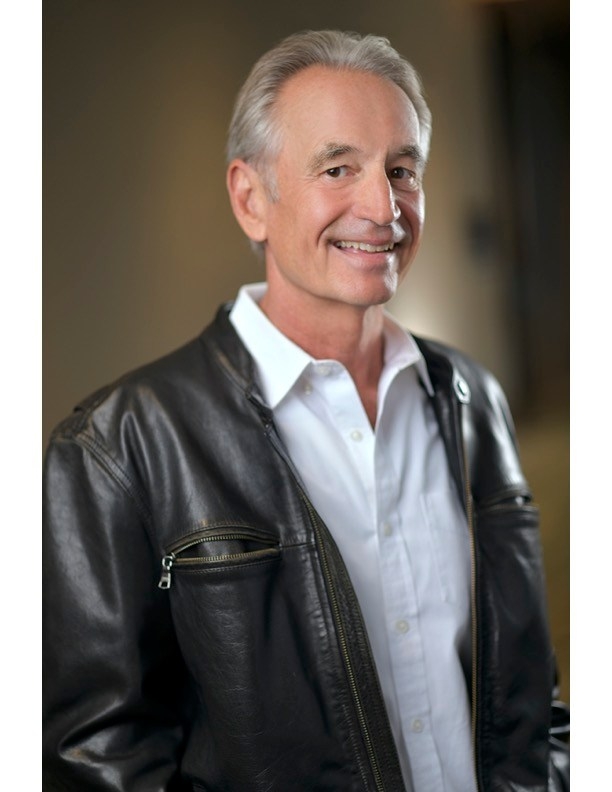
The Beginning
A boy who struggled — and knew it.
John Martin was not a good student. C's and D's most of the way through school. Math didn't process. Spelling didn't stick. Grammar felt like a foreign language. The structure that school demanded was exactly the kind of thinking his mind resisted.
He thought he was dumb. Some of his teachers probably thought so too. Some of the other kids definitely did.
But every summer, when the school library opened its doors, John had a ritual. He'd walk in and check out the same book. Almost every year. Farewell to Shady Glade by Bill Peet — a story about animals driven from their home by encroaching development, full of warmth and gentle outrage. He loved it. He still does. He's writing about it now on Substack.
One summer, when John was a little older, the librarian sniffed at the checkout desk. "You're too old for that book."
His mother pushed the book back across the counter. "He can read whatever he prefers."
A moment John has never forgottenThat exchange captures something essential about what Boys Read is built on: a boy's right to find his own book, in his own time, without shame. And a mother who understood that instinctively — even when an authority figure didn't.
The Turn
Three men who saw something.
In 11th grade, things began to shift. Not because John suddenly became a different student — but because three male teachers decided to look past the grades and see what was actually there.
Mr. Pickel
High school teacher who saw past the grades
Mr. Lewis
Another man who chose to believe in him
Sr. Wattenbarger
Spanish teacher · saw something worth saving
John had a massive imagination. His writing was vivid, colorful — just unstructured. The kind of writing that doesn't score well on rubrics but crackles with something alive. These teachers recognized that. They didn't try to fix him into a different kind of student. They saw what he actually was.
Once he got out from under the requirements that played to his weaknesses — mandatory math, standardized English — he started to breathe. B's appeared. Then more of them. Eleventh and twelfth grade looked nothing like the years before.
"I had a huge imagination — but it didn't fit the structure school demanded. My writing was vivid, colorful. The love of storytelling never left me."
— John MartinThose teachers got him to college. And college, it turned out, was where John discovered he wasn't dumb at all. He graduated magna cum laude. He was selected as the outstanding teacher of the College of Arts and Humanities. He earned a teaching assistantship to Miami of Ohio.
The Work
The stories that wouldn't be changed.
John started writing seriously in his late twenties. He shifted to children's stories after receiving strong encouragement in a creative writing course — and one of those early stories eventually became Madam Moon, a folkloric fantasy about a boy navigating a city of wonders and the weight of his own lineage.
He then wrote Brothers of War — a Civil War novel about two brothers captured and thrown into Andersonville, one of the most notorious prison camps of the war, surrounded by hardened men. A story about survival, loyalty, and what boys are capable of when everything is stripped away.
And The Bird — a middle grade adventure about a boy who breaks his grandfather out of a nursing home, steals his father's car, and drives across the country. A road trip. A bird. A relationship saved before it's too late.
Traditional publishers liked the books. But they had notes. Take the violence out of Brothers of War. Have the boy ask permission before taking the car in The Bird.
"That's not what the story is about. Two brothers captured in a notorious camp with hardened men — their fight for survival is the story. You can't take the violence out of that. That's the truth of it."
On refusing to soften Brothers of WarSo John self-published as print-on-demand emerged. And to distribute his books, he needed a platform. That platform became Boys Read.
The Mission
Boys Read grew bigger than the books.
What happened next surprised him. Teachers found the site. Librarians found it. And mothers — especially mothers — started writing in.
Help. My son won't read. He hates reading. He hates school.
Boys Read became something larger than a platform for his own books. It became a resource — a place where parents and educators could find the books that actually work for the boys in their lives. John led workshops for teachers and librarians for several years, traveling and speaking about the principles behind boys' literacy.
Then Netflix arrived. Streaming. The scroll. John watched the room change at workshops — teachers more interested in comparing what shows they were watching than in talking about boys and books. The cultural competition for boys' attention had shifted fundamentally. The workshops eventually stopped.
"It's not that boys can't read. It's that boys won't — because they don't like what's put in front of them, or how it's served up. Every boy finds a voice. An author whose voice is his voice. That's what flips the switch."
— John Martin, founder of Boys ReadNow it's 2026. The crisis has only gotten worse. Boys don't just resist books — they scroll. Hours a day, every day. The attention that reading requires is being consumed before it ever reaches a page.
Boys Read is back — rebuilt, refocused, and clear about what it's here to do. Not to shame boys into reading. Not to make literacy a chore. But to find the book that speaks to the boy who's standing in front of you, and put it in his hands before the window closes.
And yes — Girls like these books too. John's all-time favorite piece of feedback came from a reader named Emma: "I am a girl and I have read all of these books. Please write at the top of the page: books for boys and good for girls too." But the focus stays on boys. Because nobody else is focused there. And the boys who are falling behind can't wait for someone to start.
His Books
Seven books. One through-line: stories that refuse to be softened.
Writing under the pen name J. Marshall Martin, John has published seven books across middle grade, YA, and adult literary fiction. Each one was written the way it needed to be written — not the way a publisher's committee thought it should be.
There's a perfect book
for every boy. Let's find it.
John built this site so that no parent, teacher, or librarian ever has to feel helpless in front of a boy who says he hates reading. Start with the books.